100 parkruns: Setting Goals, Finding Friends and Embracing the Challenge

Guest STRIDE Story By Trevor Hirst

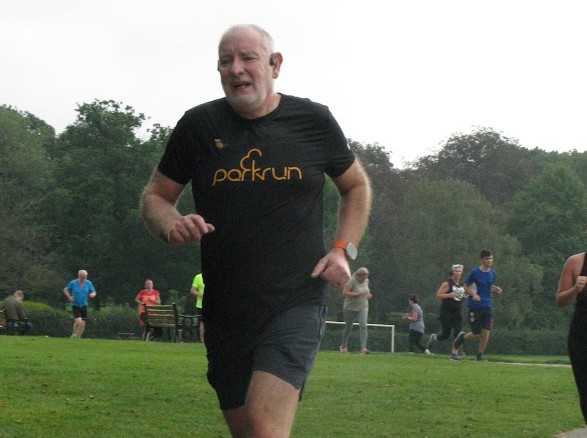
For me, parkrun is about much more than running 5km. It’s about setting goals, challenging myself, staying active and enjoying the people I meet along the way.

I’m naturally a goal-driven person. Throughout my career and personal life, I’ve always believed in setting targets, taking responsibility for achieving them and holding myself accountable. Having something to work towards gives me focus and motivation, and that philosophy extends to my running.

Every Saturday morning, parkrun provides an opportunity to get out, exercise and enjoy a little friendly competition. What started as a weekly run has developed into something much more significant, and recently I celebrated completing my 100th parkrun.

More than a Saturday morning run

One of the things I enjoy most about parkrun is its social side. Over time, I’ve built up a network of fellow runners who have become genuine friends. There’s something special about sharing a common interest, encouraging one another and catching up each week, often over a coffee afterwards.

Although we’re all there for different reasons, there’s a shared understanding that simply turning up and taking part is an achievement in itself. Of course, it’s nice to run well, and there’s always a little competitive spirit, but the experience is about much more than finishing time.

As I’ve got older, my priorities have evolved. I’m realistic enough to recognise that I’m unlikely to be competing for a win or setting a personal best every week. That doesn’t mean I’ve lost my competitive edge; I’ve simply found different ways to challenge myself and measure success.

Becoming a parkrun tourist

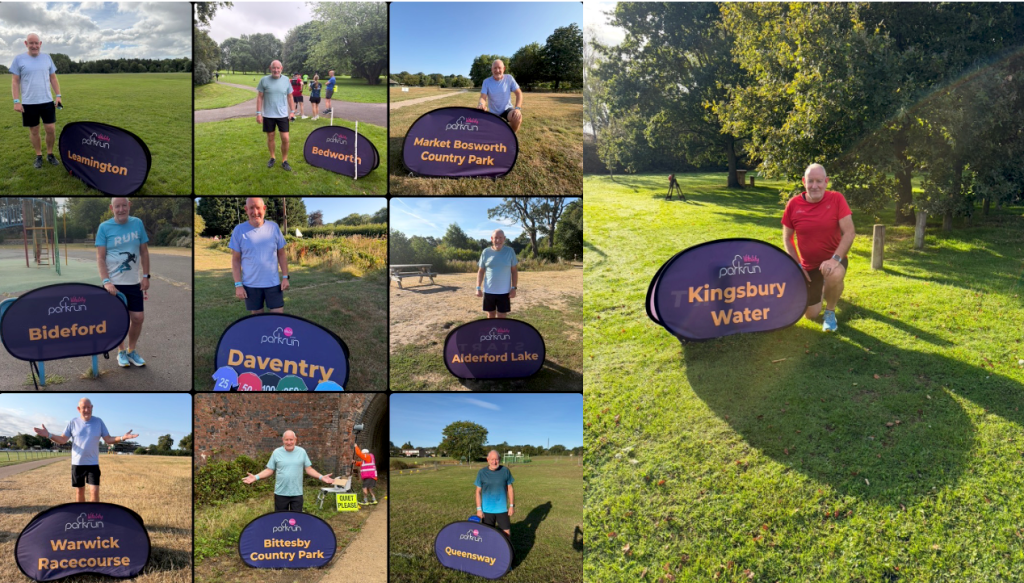
More recently, I decided to introduce a new challenge: visiting a different parkrun location every week.

Having completed my 90th parkrun, I set myself the target of running at nine different venues for runs 91 to 99, building towards my 100th event. It was a simple idea, but it added a completely new dimension to my Saturday mornings.

Being a parkrun tourist involves much more than turning up somewhere new. I need to work out where I’m going, how long the journey will take, where to park, what facilities are available and how to find the start. Then there’s the unfamiliar route itself, along with the opportunity to meet a new group of runners.

Each week brings its own little logistical exercise. I enjoy that process. It gives me something to plan, something to look forward to and somewhere new to experience.

There’s also a real sense of satisfaction in arriving somewhere unfamiliar, completing the run and knowing I’ve achieved another small personal goal.

The running is only part of the adventure. Discovering new places and expanding my network of running friends have become equally important.
The next challenge is already taking shape

One of the great features of parkrun is the range of challenges available through the parkrun app. These provide additional goals for those of us who enjoy having something to work towards.

I’m making good progress with several of them, but the parkrun alphabet is particularly high on my radar. The idea of completing parkruns at locations beginning with different letters adds another layer to my weekly tourism challenge.

Now, when I’m choosing where to run next, I’m not just looking for somewhere new; I’m also thinking about which letter I can tick off.

For someone who enjoys planning, setting targets and being accountable for achieving them, it’s an ideal combination!

Of course, not every challenge will go to plan, and that’s part of the appeal. Sometimes the practicalities of getting to a venue, the weather or the route itself will present unexpected difficulties. The important thing is to adapt, keep going and enjoy the experience.

Celebrating the achievement

I know there are many parkrunners who have completed hundreds of events, and plenty who have achieved far more than I have. But I think it’s important to recognise and celebrate our own milestones rather than constantly comparing ourselves with others.

Completing 100 parkruns was a significant achievement for me, and I’m genuinely proud of it. Each event represents a Saturday morning when I made the effort to get out, stay active and do something positive for myself.

The milestone is also a reminder of the friendships I’ve developed, the places I’ve discovered and the challenges I’ve taken on along the way.

My focus now is on continuing that journey, exploring more venues, progressing through the parkrun challenges and, of course, working towards my next milestone of 250 events.

Why I’d recommend giving it a go

For anyone who hasn’t tried parkrun, I’d absolutely recommend giving it a go. You don’t need to be a fast runner, and you certainly don’t need to be competitive. You can run, jog or walk the 5km at your own pace, and the welcoming community makes it a great way to get started.

For those already taking part, perhaps there’s an opportunity to introduce a new challenge of your own. It might be visiting a different venue, improving your consistency, working towards a milestone or simply making the commitment to turn up every Saturday.

For me, parkrun has become a valuable part of maintaining an active lifestyle, setting personal goals and building friendships.

It’s a reminder that achievement doesn’t always have to mean winning or being the best. Sometimes, it’s about showing up, challenging yourself and enjoying the journey.

And if you’re a fellow parkrun tourist, keep an eye out. I might just bump into you at one of my future Saturday morning adventures!

Trevor Hirst is a Non-Executive Director at Spark Academy, with a professional background in engineering, strategy and governance. A keen parkrunner, he recently celebrated his 100th event.

What does running give you?

STRIDE Stories are real experiences from people working across education — sharing what running, movement and community mean to them.

Share your story → hello@stride-education.org

Stay part of the STRIDE journey.

STRIDE is growing — and there’s more to come.

Subscribe for member stories, community challenges, practical ideas for finding your stride, and new thinking about sustainable working and flourishing in education.

No clutter. Just occasional emails worth opening.

By subscribing, you agree to receive occasional emails from STRIDE. You can unsubscribe at any time. See our Privacy Policy.
Running, Resilience, and Finding Balance

By Stephen Logan

Content note: This personal story includes references to suicide, bereavement and mental health.

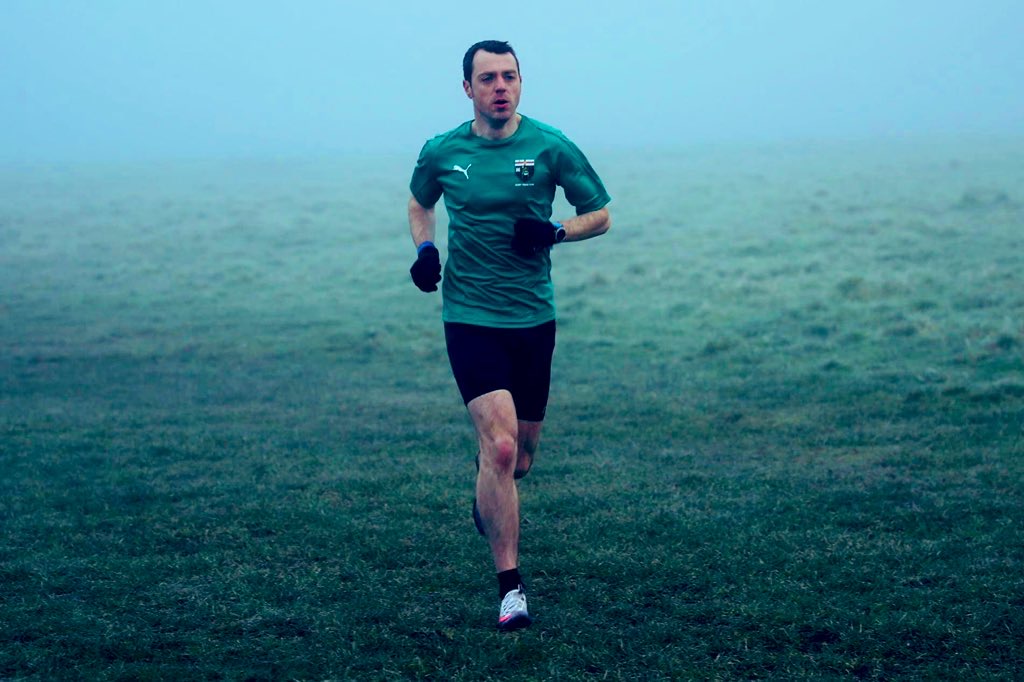
My running journey didn’t begin with grand marathon aspirations, a bucket list or even a desire to chase fast times. It started in the wake of tragedy with a colleague who died by suicide. In that immediate, shattering aftermath, running became a vital coping mechanism, offering the only space where I could process the unprocessable. It was a lifeline when words failed, a way to put one foot in front of the other when the ground beneath everything else felt entirely gone and I couldn’t cope.

Over time, those initial miles transformed into something fundamental to who I am and how I navigate the world both personally and professionally.

Today, running is an essential part of my life. As Principal of a secondary school and working across educational leadership roles, my days are filled with challenges,  decision-making and constant interaction. Education is a deeply rewarding profession, but it is also one that demands immense energy, empathy, and resilience.

That is why running remains vital.

For me, running is far more than physical exercise; it is a mental release and a dedicated space for reflection. Whether it’s an early morning track session, a weekend road run, or a steady effort after a long school day, running offers a clarity that is hard to find anywhere else. It’s where problem-solving happens without the noise of notifications, where perspective is restored, and where stress is quietly burnt off. I often find that my best ideas and clearest leadership insights don’t come while sitting at a desk, but somewhere around the third or fourth mile.

Managing regular training alongside a career in education requires intentionality, but I view it not as something competing with my work, but as something that actively sustains it. Prioritising time for physical and mental well-being isn’t selfish it makes me a better leader, a better colleague, and a more present person. It teaches you consistency, discipline, and patience: the understanding that real, meaningful progress is built through small, continuous efforts repeated over time.

Along the way, there have been some incredible personal highlights from taking on the endurance test of the Apex Challenge to lining up at the Amsterdam Half Marathon and racing overseas at the Carlingford 5K. These experiences, coupled with founding the High Performance Foundation, have shown me firsthand how sport and shared purpose can inspire, connect, and transform communities. 

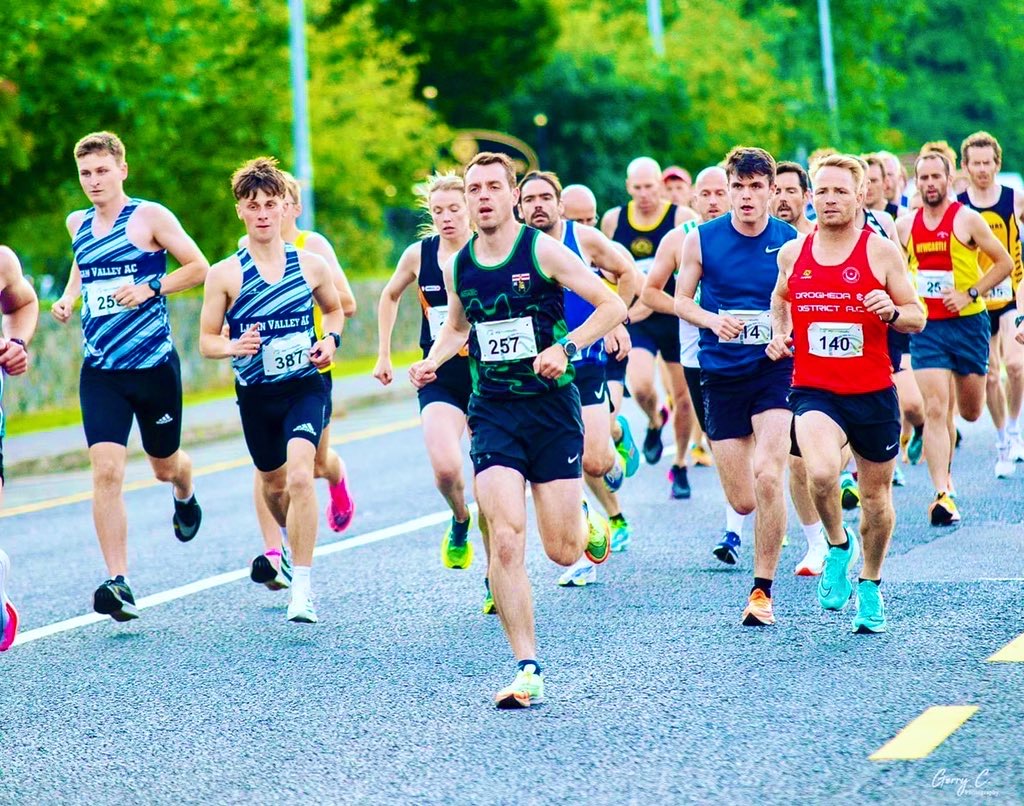
That same drive has helped me push my personal limits on the road and track, setting personal bests that I’m quietly proud of from a 16:54 Parkrun and a 16:43 5K, through to a 34:37 10K, a 58:06 10-miler, and a 1:17 half marathon. My biggest privilege is running with the East Yorkshire Road Runners group every week.

Equally central to my running life is the parkrun community itself. Crossing the milestone of 350 parkruns is a reminder of what the movement stands for. Every Saturday morning at 9:00 am, thousands of people from all walks of life gather in parks across the country. There are no barriers, no egos, and no prerequisites just a community coming together to move, support one another, and start the weekend right.

Whether I’m running at my local event on the Beverley Westwood or visiting another course, parkrun embodies the very best of community spirit. It reminds me daily of the power of accessible sport and inclusive environments principles that mirror exactly what we strive to build in our schools.

The personal and professional impact of running has been profound. Professionally, it has strengthened my mental stamina, taught me to embrace discomfort, and reinforced the value of steady, long-term effort over quick fixes. Personally, it brings energy, balance, and a constant connection to a supportive running community, while keeping me grounded in why taking care of our mental health matters so deeply.

To anyone in education or any demanding field who is navigating difficult times, considering taking up running, or simply trying to find time for themselves, my advice is to start where you are. You don’t need to be fast and you don’t need to cover long distances. Just lace up a pair of shoes, step out the door, and give yourself that time. The benefits far exceed the physical workout.

Stephen Logan

Principal, Healing Academy | Harbour Learning Trust

What does running give you?

STRIDE Stories are real experiences from people working across education — sharing what running, movement and community mean to them.

Share your story → hello@stride-education.org

Stay part of the STRIDE journey.

STRIDE is growing — and there’s more to come.

Subscribe for member stories, community challenges, practical ideas for finding your stride, and new thinking about sustainable working and flourishing in education.

No clutter. Just occasional emails worth opening.

By subscribing, you agree to receive occasional emails from STRIDE. You can unsubscribe at any time. See our Privacy Policy.
How Do We Find a Stride We Can Sustain?

What a new running community is making me think about work, belonging and flourishing in education.

How do we continue to do work that matters to us without continually depleting the resources we need to do it?

It’s a question I’ve been thinking about increasingly over the last few years. And, perhaps slightly unexpectedly, starting a running community for people who work in education has made me think about it even more.

A few weeks ago, STRIDE didn’t exist. Well, it existed in my head! But I had no idea whether anybody else would actually be interested in it.

The idea was fairly simple. I love running and I work in education. Over the years, particularly as the demands of being a headteacher have grown, running has become increasingly important to me. Not because it somehow makes the difficult parts of working in education disappear, but because it gives me something: space to think, time to reset, a challenge that is mine, sometimes connection with other people and sometimes the exact opposite — an hour completely on my own.

I wondered whether there might be something in bringing those two worlds together. So I created STRIDE: a running community for people who work in education.

A few weeks later, we’ve passed 100 members. I’m obviously delighted about that, but the number isn’t really the interesting bit.

It’s what I’m beginning to notice about the people behind it.

We all got here differently

Recently, I asked a simple question in our weekly Strides Together post: What got you into running?

The answers couldn’t have been much more varied. People talked about Couch to 5K, parkrun, friends persuading them to give it a go, family, challenges and simply wanting to get fitter.

Some had only been running for a relatively short time. Others had gone from tentative first runs to marathons, ultras and distances I’m not sure I even want to think about! Some also talked about running becoming increasingly important as their responsibilities in education grew.

There really isn’t a typical STRIDE runner.

Some people are taking their first steps into running. Others are chasing PBs. Some walk or run-walk, some love parkrun, some are training for marathons and ultras, and some simply want half an hour outside after work.

Different distances, different speeds, different motivations and different roles in education.

And yet, a community is beginning to form.

Perhaps belonging doesn’t require us to be the same

That has got me thinking about some of the research I’ve been reading while exploring the wider ideas behind STRIDE.

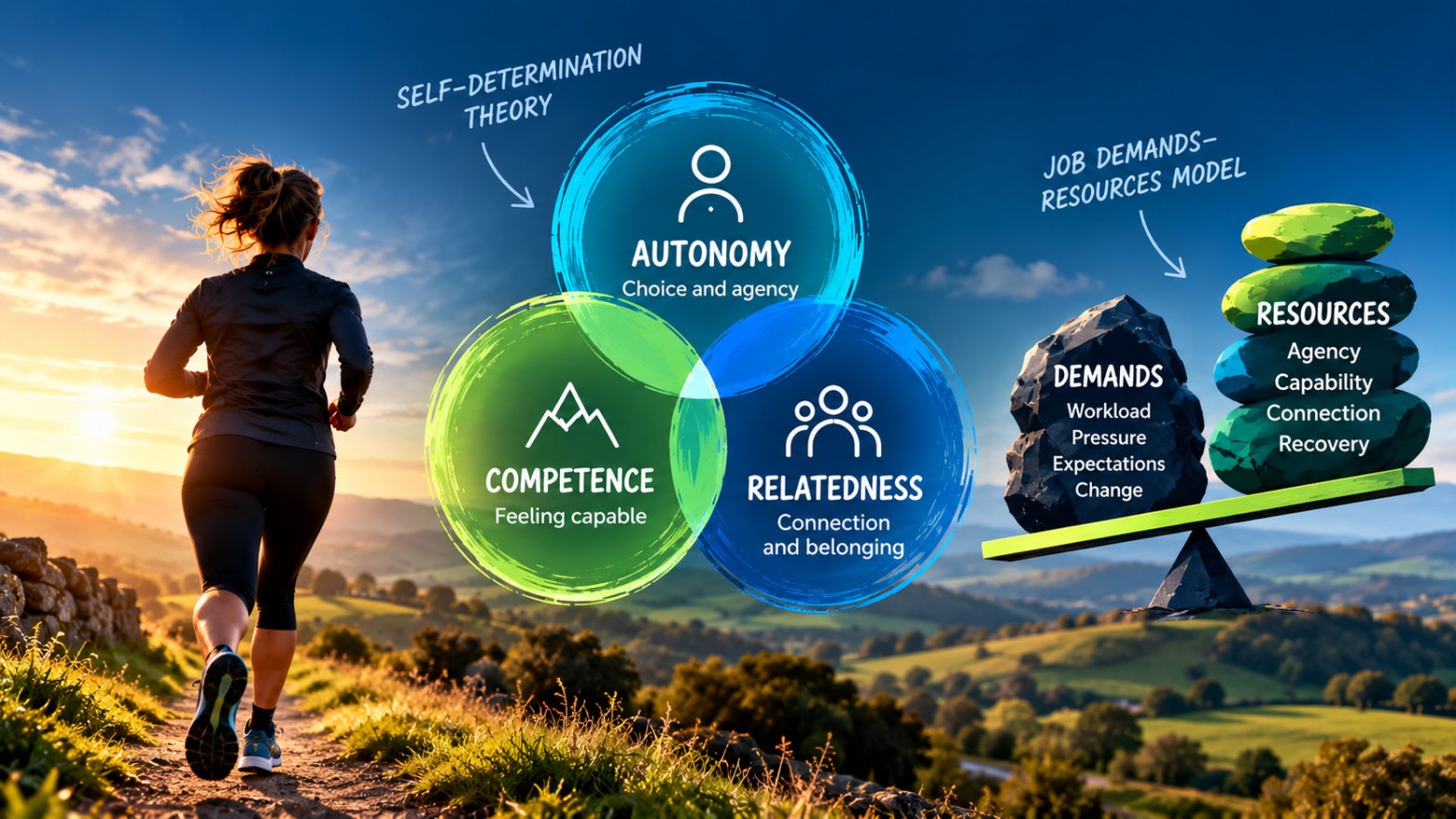
One area I’ve found particularly interesting is Self-Determination Theory, developed through the work of psychologists Edward Deci and Richard Ryan. At its heart is the idea that three basic psychological needs matter to human motivation and wellbeing: autonomy, competence and relatedness.

Put more simply, we might think about having some choice and agency, feeling capable, and experiencing meaningful connection with other people.

I’ve found myself looking at STRIDE through that lens. Nobody is being told what participation has to look like. There is no minimum pace or distance, no requirement to race and no expectation that everybody has the same goal.

We’ve said from the beginning: Participation before performance. Every stride matters.

Perhaps that matters more than I realised when I first wrote it. People can have enough in common to belong without having to become the same.

Finding your own stride

And that’s where running becomes an interesting metaphor for something much bigger.

Anyone who runs for long enough learns that there isn’t one pace that works all the time. Terrain, distance and conditions change. Sometimes you push and sometimes you recover. A stride that felt easy last week might feel difficult today.

You continually adjust.

I’ve been thinking a lot about that in relation to working in education. Education is meaningful work, but it can also be incredibly demanding work.

Perhaps sustainable working isn’t about reaching some perfect state where everything is permanently balanced and nothing feels difficult. Perhaps it is much more dynamic than that.

It’s about finding a stride you can sustain — and being able to adjust it as the demands, resources and circumstances around you change.

What helps us sustain the stride?

Another strand of research I’ve been exploring looks at the relationship between the demands people experience at work and the resources available to meet them.

The Job Demands–Resources model provides a useful way of thinking about this. Challenge itself isn’t necessarily the problem. Meaningful work can be difficult, just as training for something we care about can be difficult. There can be satisfaction in effort, challenge and achievement.

But demands become much harder to sustain when they continually consume more than we have available to meet them.

That distinction matters because the answer to unsustainable working cannot simply be telling individuals to become more resilient. And it certainly isn’t telling everybody in education to put their trainers on.

Running isn’t a cure for workload, poor organisational culture or harmful working conditions. Organisations have responsibilities too.

But movement can be one resource available to us. So can connection, developing our capability, having some influence over the things that affect us, and having opportunities to recover from periods of effort.

Those ideas — agency, capability, connection and recovery — are increasingly shaping my thinking about what it might mean to find a sustainable stride in education.

Education gives us one connection. Running gives us another.

That’s why watching the STRIDE community develop has been so interesting.

People are beginning to encourage people they’ve never met, share stories and discover common ground. Completely different distances are contributing towards the same community challenge. Someone’s short walk can sit alongside somebody else’s Sunday long run; someone completing their first 5K can belong alongside somebody training for an ultra.

Nobody has to earn their place.

Perhaps the thing we share isn’t how we run. It’s that we run.

Alongside that is another shared experience: we work in education.

Teachers, teaching assistants, headteachers, support staff and people working across the wider education system might have very different roles, but there are parts of working in education that we understand about one another without much explanation.

Education gives us one connection. Running gives us another.

Somewhere between the two, STRIDE is beginning to find its identity.

So what does it mean to find your stride?

I’m very conscious that a running community only a few weeks old isn’t a research study. The conversations taking place within STRIDE don’t prove anything.

But they are making me curious.

They’re making me think more deeply about agency, capability, connection, recovery, demand and the conditions that enable people to sustain meaningful work over time. And they’re making the phrase find your stride mean something slightly different to me.

It isn’t about finding the right way, and it certainly isn’t about finding somebody else’s way.

It’s about understanding the demands you’re facing, the resources available to you and the things you can influence — and then being able to adjust as circumstances change.

Just like running, sometimes that might mean pushing. Sometimes it might mean slowing down or recovering. Sometimes it might mean asking for support or changing direction.

And sometimes the problem isn’t your stride at all.

It’s the conditions you’re being asked to run in.

That matters, because sustainable flourishing in education cannot only be the responsibility of the individual. If the conditions themselves are creating persistent and avoidable depletion, asking somebody to become better at coping with them isn’t enough.

STRIDE is still very new and I’m still learning. But perhaps that’s what we’re beginning to explore: how we find our own stride, how we help others find theirs, and how we create conditions across education in which more of us can sustain it.

We Run. We Belong. We Flourish.

Helping education move.

What does running give you?

STRIDE Stories are real experiences from people working across education — sharing what running, movement and community mean to them.

Share your story → hello@stride-education.org

Stay part of the STRIDE journey.

STRIDE is growing — and there’s more to come.

Subscribe for member stories, community challenges, practical ideas for finding your stride, and new thinking about sustainable working and flourishing in education.

No clutter. Just occasional emails worth opening.

By subscribing, you agree to receive occasional emails from STRIDE. You can unsubscribe at any time. See our Privacy Policy.
More Than the Miles

What running — and finding a running community — gives me

Running has become one of those things in my life that gives me far more than I ever expect from it. On the surface, it is simple: put on a pair of trainers, get out of the door and put one foot in front of the other. But for me, it has become about much more than the miles.

Working in education is hugely rewarding, but it can also be all-consuming. There is always something else that could be done, someone who needs your time, another conversation to have or another problem to solve. It is very easy for the working day to follow you home, even when you have physically left the building. Running gives me a bit of space from that. It gives me time to think, to process and, sometimes, not to think about work at all.

There is something about being outside and moving that helps put things back into perspective. Some runs feel easy, others definitely do not. But I cannot remember many occasions when I have come back from a run wishing I had not gone. I nearly always return feeling clearer, more positive and better equipped for whatever comes next.

More recently, though, running has given me something I perhaps did not realise I was missing: community.

Taking the step to join a running club felt like quite a big one. Running had often been something I did on my own and, like many people, I think there was a little bit of apprehension about joining a group. Would I be quick enough? Would I fit in? Would everyone else know exactly what they were doing? It is very easy to create reasons in your head not to take that first step.

What I found was almost the complete opposite of those worries. I found people who were welcoming, encouraging and genuinely pleased to see others turn up. Yes, the running matters, and we all have our own goals, but the conversations, encouragement and shared experience matter just as much.

There is something really powerful about running alongside other people. You talk in a different way when you are side by side rather than sitting across a desk or in a meeting. Conversations happen naturally. You learn about people, you laugh, you encourage one another through the tougher miles and you celebrate the small wins together. A run that might have felt difficult on your own somehow feels more manageable when you are part of a group.

That sense of belonging has probably been the biggest surprise for me. Joining a running club has reminded me that wellbeing is not only about finding time for ourselves. Sometimes it is also about finding the right people to share that time with.

I think there is a strong connection here with education. So much of our work is built around relationships, belonging and community, yet those of us working in schools can sometimes forget that we need those things too. We spend a lot of time creating environments in which children and young people can flourish. We also need to give ourselves permission to find the things that help us flourish.

For me, running is increasingly one of those things.

It gives me headspace. It gives me a challenge. It gets me outside. It reminds me that progress is rarely about one big moment, but about turning up consistently and taking the next step. And now, through joining a club, it has given me new connections and a real sense of community too.

That is why the idea behind STRIDE resonates with me. Running does not need to be about times, distances or personal bests. It can be, if that is what motivates you, but it can equally be about making some space in a busy week, having a conversation with someone new, clearing your head after a difficult day or simply doing something that makes you feel better.

Sometimes the hardest part really is just getting out of the door. But I am learning that you do not always have to do that on your own.

David Higginbottom

(Head of HISP Teaching School Hubs and School Improvement Lead, HISP Multi-Academy Trust)

What does running give you?

STRIDE Stories are real experiences from people working across education — sharing what running, movement and community mean to them.

Share your story → hello@stride-education.org

The Lie We Tell Ourselves: “I’ll Start When Things Calm Down.”

It’s getting late.

You know you should go for that run.

But you’re tired.

Tomorrow feels like a better option.

Tomorrow becomes next week.

Next week becomes next term.

And before you know it, months have passed.

I know this pattern because I lived it for years.

I kept telling myself that I would start running properly again when work became a little quieter.

There was just one problem.

Work never became quieter.

There is always something else

Working in education can be enormously rewarding.

It can also expand to fill almost every bit of space we give it.

There is always another lesson to improve. Another email to answer. Another meeting to prepare for. Another problem to solve. Another new priority that suddenly feels urgent.

And somewhere amongst all of that, looking after ourselves can quietly slip down the list.

Not because we don’t think it matters.

Because we tell ourselves we’ll get to it later.

When things calm down.

But what if they don’t?

I stopped trying to find time

For a long time, I thought I needed to find time to run.

Eventually, I realised I had it the wrong way around.

I needed to make time.

That didn’t mean suddenly finding an hour every day or following the perfect training programme.

Sometimes it meant twenty minutes.

Sometimes a slow run.

Sometimes simply getting outside for a walk.

The important thing was starting.

And gradually, something changed.

Running stopped feeling like another thing competing for my time.

It became something that helped me deal with everything else demanding it.

More than exercise

Some of my best thinking now happens while I’m running.

Away from my desk.

Away from emails.

Away from meetings.

Running gives me space to process difficult conversations, think through problems and put things back into perspective.

Sometimes I come home with an answer.

Sometimes I just come home feeling better.

It also reconnects me with something that’s incredibly easy to lose during a busy working week: the world beyond work.

A sunrise before the working day begins.

Trails and footpaths I’ve never explored before.

Watching the seasons change.

Listening to birds instead of notification sounds.

For me, running isn’t about escaping education.

It’s about returning to it with greater clarity, perspective and energy.

Small choices become habits

Perhaps the biggest lesson running has taught me has nothing to do with pace or distance.

It’s about consistency.

We often imagine that changing our lives requires a dramatic transformation: a new training plan, a gym membership, a race entered, a complete overhaul of our routine.

Usually, it starts much smaller.

One walk.

One run.

Twenty minutes protected in the diary.

One morning when we choose to move before opening the inbox.

Those decisions don’t feel particularly significant at the time.

But repeat them often enough and something begins to change.

Movement becomes less of something you should do and more of something you simply do.

That’s how habits are built.

You don’t need to become a runner

This matters to STRIDE because I don’t want this community to be about creating faster runners.

You don’t need to run a marathon.

You don’t need a certain pace on Strava.

In fact, you don’t even need to run.

Walk around the block.

Start Couch to 5K.

Run-walk your first parkrun.

Train for a marathon.

It all counts.

There is good evidence behind the principle too. Regular physical activity is associated with benefits for both physical and mental wellbeing, while spending time being active outdoors can offer additional benefits.

But perhaps the most important thing is much simpler:

something is better than nothing.

And something can become a habit.

Maybe things don’t need to calm down first

September becomes October.

October becomes Christmas.

Christmas becomes another term.

There will always be another deadline, another email and another reason why today isn’t quite the right day.

So perhaps the answer isn’t waiting for life to create some space for us.

Perhaps we have to protect a little of it ourselves.

You don’t need to run 10 kilometres.

You don’t need to beat anybody.

You don’t need the perfect plan.

You simply need to begin.

Because sometimes the hardest stride really is the first.


Take your next stride

Whether it’s a walk around the block, your first run in years or training for your next race, there’s a place for you in STRIDE.

Join the STRIDE community and help education move.

Stay connected with STRIDE.

Stories, ideas, challenges and inspiration to help you keep moving.

Join the STRIDE mailing list for occasional updates from the community — straight to your inbox.

Why I Started STRIDE: Helping Education Move

For a long time, I told myself I didn’t have time to run.

I was a teacher, then a headteacher. There was always something else that needed doing. Another email. Another meeting. Another problem to solve. Another priority that somehow felt more important than making time for myself.

Running could wait.

The problem was that tomorrow kept moving.

Eventually, I realised something remarkably simple:

I didn’t need to find time. I needed to make it.

That realisation changed much more than my running.

And, eventually, it became the idea behind STRIDE.

Where it began

I’ve loved running for as long as I can remember.

As a child, I ran for Wakefield Harriers. I loved racing and trying to improve, but looking back, there was something else that mattered just as much.

Belonging.

Being part of a club. Training alongside other people. Encouraging one another. Sharing the nerves before a race and the stories afterwards.

Running wasn’t simply something I did. It connected me with other people.

Then life got busier.

I became a teacher and later a headteacher. Like so many people working in education, I gradually allowed work to take priority.

Running came and went.

There were periods when I ran regularly and periods when I barely ran at all. I’d tell myself I would get back to it when things settled down.

But education doesn’t really work like that.

There is always another deadline, another challenge and another reason why today isn’t quite the right day.

When running became something different

During some particularly demanding periods in my career, I began making time for running again.

And this time it felt different.

Of course, I still enjoyed getting fitter. I still enjoyed racing. I still liked the satisfaction of running a little faster or a little further.

But running started giving me something I hadn’t really appreciated before.

Space.

Space to think.

Space to reflect.

Space to process a difficult conversation or work through a problem.

Sometimes simply space to breathe.

I started noticing how often a problem that felt overwhelming at my desk seemed more manageable after half an hour outside.

I noticed the seasons changing. I discovered paths and places I’d never seen before. I spent time away from screens, emails and notifications.

And I realised that making time for myself wasn’t taking something away from my work.

Quite often, it allowed me to return to it with more energy, perspective and clarity.

Today, I’m back running with Wakefield Harriers. I love racing and chasing the occasional personal best, but running means far more to me now than it did when I was younger.

Some days I run hard.

Some days I run slowly.

Sometimes I run with others.

Sometimes I need to run alone.

What matters is that I run.

So why STRIDE?

Because I know I’m not the only person in education who has struggled to make time for themselves.

Education is an extraordinary profession.

It can also be consuming.

We spend our working lives looking after other people. Teaching them. Leading them. Supporting them. Helping them develop and flourish.

And somewhere amongst all of that, it can become surprisingly easy to stop looking after ourselves.

I don’t believe running solves every challenge facing people working in education.

It doesn’t.

And STRIDE isn’t about telling everybody they need to become a runner.

It’s about something much simpler.

Making time for ourselves again.

Moving.

Connecting.

Building habits that make our lives healthier, happier and more sustainable alongside the work we care deeply about.

That might mean walking around the block.

It might mean completing Couch to 5K.

It might mean turning up at parkrun for the first time.

Or it might mean training for your next marathon.

There isn’t a qualifying pace or distance.

There is simply a place to begin.

What I hope STRIDE becomes

Right now, STRIDE is at the very beginning of its journey.

And I like that.

My hope is that it grows into a genuine community of people from across education who encourage one another to move and make time for themselves.

A community where someone completing their first walk feels every bit as welcome as someone training for a marathon.

A place where we celebrate turning up, not simply running fast.

I hope we can take on challenges together, share stories, meet at parkruns and races and, eventually, find new ways of helping people across education build healthier and more sustainable lives.

Over time, I’d love that impact to reach schools and families too.

And there is another part of the vision.

Through STRIDE Professional Learning, I hope to explore some of the same questions beyond running: how we build sustainable habits, protect the people working in education and create careers in which people can thrive for the long term.

But I’m in no rush to build all of that.

The community comes first.

I don’t know exactly what STRIDE will become.

In fact, I don’t think I should.

Because if this genuinely becomes a community, the people who join it should help shape where it goes next.

This is the first stride

So this is the beginning.

One idea.

One community.

And one belief at the heart of it:

The people who spend their lives helping others to flourish need time and space to flourish too.

If you work in education, I’d love you to be part of what comes next.

You might already love running.

You might be returning after years away.

You might be thinking about starting but haven’t quite managed that first step yet.

That’s okay.

Walk. Jog. Run. Run-walk. It all counts.

Join us. Share your journey. Encourage somebody else.

And let’s see where this can go.

Every journey begins with a single stride.

This is ours.

Stay connected with STRIDE.

Stories, ideas, challenges and inspiration to help you keep moving.

Join the STRIDE mailing list for occasional updates from the community — straight to your inbox.